
Discover the real digital nomad visa processing time in Spain. Plan ahead to avoid delays and ensure a smooth application journey.
Digital Nomad Visa Processing Time: 2026 Planning Guide

TL;DR:
- The Spain Digital Nomad Visa typically takes three to six months from start to TIE card receipt, largely due to document preparation times. Most delays stem from controlling factors like background checks, apostilles, and translations, which applicants can address early in the process. Proper sequencing and complete initial applications significantly reduce processing times and increase approval success.
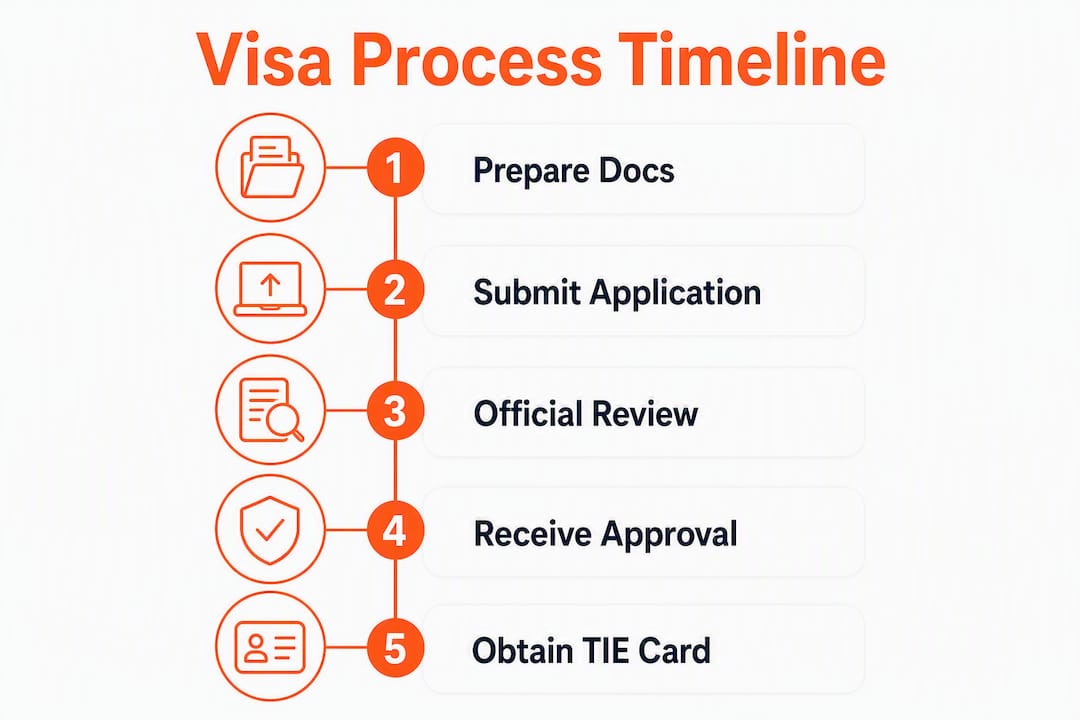
Plan for 3–6 months total, not just the statutory window. The Spain Digital Nomad Visa realistically takes 3–6 months total, from initial document preparation through receiving your TIE card, not just the government review window. Document preparation alone typically runs 1–3 months, UGE in-country processing occurs in about 3–4 weeks (16–18 business days once a complete file is submitted), and post-approval TIE steps add 4–10 weeks. Consular routes may take longer due to appointment wait times and local backlogs.
- Digitalnomadinspain clients typically move through the process faster than self-applicants, largely because complete, correctly sequenced applications avoid the most common delay traps
Table of Contents
- How long does digital nomad visa processing actually take?
- What commonly delays a digital nomad visa application
- How to build a realistic timeline from document prep to TIE card
- Practical steps that actually reduce your processing time
- Spain case study: why 3–6 months is the right planning buffer
- What does a digital nomad visa application actually cost?
- Key Takeaways
- Why conservative planning is the only kind that works
- Your Spain visa application, handled end to end
- Useful sources
- FAQ
How long does digital nomad visa processing actually take?
The gap between the official timeline and the real one is where most applicants get burned. Statutory windows tell you how long the government has to decide once they have everything. They say nothing about how long it takes you to get everything together.
| Country / Route | Typical Decision Window | Total Realistic Timeline | Where You Apply |
|---|---|---|---|
| Spain (UGE in-country) | statutory 20-business-day window | 3–6 months | In Spain, electronically |
| Spain (consular) | variable statutory window | 3–6 months (often longer at busy consulates) | Spanish consulate abroad |
| Portugal D8 | 2–4 months | several months | Portuguese consulate |
| Czech Republic | approximate 45-day statutory window | several months | Czech embassy abroad |
| Fast-track programs | 1–30 days | several weeks | Varies (often online) |
The “timer starts” moment matters. For Spain’s UGE route, the clock begins when authorities receive a complete dossier. Submit with a missing apostille and you’re not in the queue yet. For consular routes, the appointment itself is often the first bottleneck, with wait times of 2–8 weeks at busy consulates before you even hand over documents.
Fast-track programs (some Caribbean and Southeast Asian permits) can approve in under 30 days, but they often carry narrow income thresholds or limited work categories. Travel and post-approval registration steps still add time regardless.
What commonly delays a digital nomad visa application
Most delays are predictable. The documents with the longest lead times are the ones applicants order last, and that sequencing mistake is the single most fixable problem in the whole process.
Document bottlenecks (controllable):
- FBI background check (US applicants): several weeks depending on the channel; the Identity History Summary check via the FBI’s own portal is slower than using an FBI-approved channeler
- Apostilles: variable time depending on the issuing state; some states are faster than others, and the Hague apostille on a federal document (like an FBI check) adds another step
- Sworn translations: typically about one to two weeks with a certified translator; rush fees can compress this time
- Social Security coverage certificate: a few weeks; often overlooked until late in the process
- Bank statements and income proof: Usually fast, but must be recent (within 3 months of submission)
Administrative bottlenecks (less controllable):
- Consulate appointment availability: often several weeks at high-demand consulates; some cities are significantly worse than others
- Requerimientos (requests for additional documents): typically arrive near the end of the statutory window, pausing the clock. A complete response usually adds some additional processing time; an incomplete response sends you back to the queue
- TIE card biometric appointments (post-approval): booking a cita previa in Madrid or Barcelona can take several weeks; the physical card arrives a few weeks after the appointment, sometimes longer
Pro Tip: Order your FBI background check and apostilles on day one of your planning process. Everything else can run in parallel. If you wait until your translations are done to request the FBI check, you’ve added 6–12 weeks to your timeline for no reason.
How to build a realistic timeline from document prep to TIE card

Two routes, two different planning calendars. Here’s how each phase typically plays out.
Phase timeline (both routes):
| Phase | Typical Duration | Key Trigger |
|---|---|---|
| Document preparation (background checks, apostilles, translations) | several weeks to a few months | Start immediately; FBI check is the gating item |
| Consulate appointment (consular route only) | several weeks wait | Book as early as possible, before docs are ready |
| Application submission and processing | statutory window (UGE) / variable consular window | Clock starts on complete application receipt |
| Entry into Spain / tourist entry (UGE route) | Within Schengen allowed period | Must apply well before hitting the limit |
| Empadronamiento (local registration) | about one to two weeks to book | Required before TIE appointment |
| TIE card biometrics + card delivery | multiple weeks | Cita previa availability drives this |
Sample Calendar A: In-country UGE route (US applicant)
- Month 1: Request FBI background check via channeler; order apostilles on existing documents; book certified translator
- Month 2: Receive FBI check; get apostille; complete translations; gather income proof and bank statements
- Month 3: Enter Spain on tourist entry; submit UGE application electronically; receive decision within the statutory window
- Month 3–4: Register empadronamiento; book TIE biometric appointment
- Month 4–5: Attend biometrics; receive TIE card
Sample Calendar B: Consular route (US applicant)
- Month 1: Request FBI check; book consulate appointment immediately (don’t wait for documents)
- Month 2: Receive FBI check; apostille; translations; gather supporting docs
- Month 3: Attend consulate appointment; submit application
- Month 4–5: Receive visa decision; travel to Spain
- Following months: Register empadronamiento; complete TIE process
The UGE route is more predictable precisely because it removes the consulate appointment variable. The tradeoff is that you need to be physically in Spain and must apply with enough Schengen days remaining to cover the processing time.
Practical steps that actually reduce your processing time
Some actions cut real weeks off your timeline. Others feel productive but don’t move the needle.
- Request your FBI background check first, through an FBI-approved channeler. The channeler route is faster than the direct FBI portal. This single step determines your earliest possible submission date.
- Book your consulate appointment before your documents are ready (consular route). Appointments fill weeks out; you can always reschedule if your docs aren’t ready, but you can’t manufacture an earlier slot.
- Use a certified translator with experience in Spanish immigration documents. Generic certified translators sometimes miss formatting requirements. A requerimiento triggered by a translation error costs 2–4 weeks.
- Check every document’s issue date before submitting. Spain requires most supporting documents to be issued within 3 months of application. A bank statement that’s 91 days old gets rejected.
- Prepare a requerimiento response kit in advance. Gather any document you might be asked for but didn’t include. When the request arrives on day 19, you want to respond within 48 hours, not 2 weeks.
- Pre-book your empadronamiento appointment before you travel. Some municipalities allow advance booking. Getting this done in week one of your Spain arrival saves time before the TIE queue.
- Submit a complete application on the first attempt. This sounds obvious, but incomplete applications are the most common cause of extended timelines. Every missing document restarts the queue position.
When to hire a consultant: If you’re applying from a country with complex apostille chains, if your income structure is non-standard (multiple clients, LLC income, equity), or if you’ve had a previous visa refusal, professional help pays for itself in avoided delays. Digitalnomadinspain’s document preparation and submission service is built specifically around these bottlenecks.
What doesn’t help: Emailing the consulate for status updates rarely accelerates anything and occasionally flags your file for extra scrutiny. Track your application through official channels and respond to requests immediately instead.

Spain case study: why 3–6 months is the right planning buffer
Spain’s Digital Nomad Visa is one of the most structured programs in Europe, which makes it more predictable than most, but only if you understand where the real delays live.
The UGE processes applications in about 3 to 4 calendar weeks (16–18 business days) once it has a complete file, which is relatively fast by European standards. The consular route is a different story: appointment waits, forwarding to Madrid for verification, and variable embassy staffing levels cause longer decision times, before you factor in document prep.
The total realistic window from “I’m starting my documents” to “I have my TIE card in hand” is typically 3–6 months. Plan for a longer timeline if you’re applying from a country with slower background check infrastructure or targeting a high-demand consulate.
Renewals: The digital nomad visa renewal Spain filing window opens 60 days before your authorization expires and closes 90 days after (late filing may carry a surcharge). Renewal decisions typically resolve within about three to four weeks. The practical advice: file at the 60-day mark, not the last minute. Processing is fast, but gathering updated income documentation, a new background check, and translations takes time even the second time around.
Pro Tip: The requerimiento trap hits hardest on the consular route. If your consulate forwards your file to Madrid for secondary review, expect the requerimiento to arrive near day 20 of the statutory window. Have your full document set organized and ready to upload within 48 hours of any request. Slow responses don’t just add days — they can reset your queue position entirely.
For a full breakdown of the Spain digital nomad visa requirements and what each document needs to include, Digitalnomadinspain’s 2026 guide covers every item with US-specific notes.
What does a digital nomad visa application actually cost?
Fees don’t just affect your budget. Some paid services directly compress your timeline.
| Fee Type | Typical Amount | Effect on Timeline |
|---|---|---|
| Spain DNV government fee (Modelo 790) | €73–€80 | Required to submit; no timeline effect |
| TIE card fee | ~€16 | Required for biometrics appointment |
| FBI background check (channeler) | $17–$20 | Channeler is faster than direct FBI portal |
| Apostille (per document, US state) | $5–$20 per document + state fees | Varies by state; some states offer expedited service |
| Sworn translation (per document) | $50–$100 | Rush service (3–5 days) costs 30% more |
| Courier (apostilled docs to translator) | $25–$40 | Saves 3–5 days vs standard mail |
| Professional visa service | Varies by provider | Can reduce total timeline by weeks through complete first-time submission |
Rush translation fees are worth paying. A standard translation turnaround of 10–14 days can compress to 3–5 days for a modest premium, and that gap matters when you’re trying to hit a consulate appointment date. Courier costs between the apostille authority and your translator are similarly cheap relative to the time they save.
Government processing fees themselves don’t have a fast-track option for Spain’s DNV. The 20-business-day statutory window is fixed regardless of what you pay. What you’re buying with professional services is a higher probability of a complete first submission, which is the only reliable way to avoid queue re-entry. For a detailed cost breakdown, Digitalnomadinspain’s Spain digital nomad visa cost guide covers every line item with current figures.
Budget a contingency of €200–€400 for unexpected requerimientos. A second apostille, an additional translation, or a notarized document you didn’t anticipate can arrive with a 10-day response window.
Key Takeaways
Realistic digital nomad visa processing time runs 3–6 months total, with document preparation, not government review, as the longest single phase for most US applicants.
| Point | Details |
|---|---|
| Plan 3–6 months total | Government review is fast; document prep and post-approval TIE steps are the real timeline drivers. |
| Start FBI check immediately | US applicants face a 4–18 week background check window that determines the earliest possible submission date. |
| UGE route is more predictable | In-country UGE processing runs 16–18 business days; consular routes often add months of variability depending on local backlogs. |
| Renewal window opens at 60 days | File your Spain renewal 60 days before expiry; late filing after 90 days post-expiry may incur a surcharge. |
| Digitalnomadinspain reduces timeline risk | Their end-to-end service covers document prep, translations, and submission, with a 98% success rate and typically 30% faster processing than self-applicants. |
Why conservative planning is the only kind that works
Most people underestimate the digital nomad visa application timeline because they read the statutory window and stop there. Twenty business days sounds fast. It is fast, once you’re in the queue. Getting into the queue is the hard part.
The applicants who run into real trouble are the ones who booked a one-way flight before their FBI check came back, or who submitted a file with a 95-day-old bank statement and had to restart. These aren’t edge cases. They’re the most common failure modes.
What Digitalnomadinspain’s 98% success rate actually reflects is a process built around sequencing. Start the slowest documents first. Submit a complete file. Respond to any requerimiento within 48 hours. None of that is complicated, but it requires knowing the sequence before you start, not after your first rejection.
The conservative 3–6 month planning buffer isn’t pessimism. It’s what the data shows when you add up document lead times, appointment waits, processing windows, and TIE card delivery. Anyone promising a faster guaranteed outcome is ignoring the parts of the process they don’t control.
Your Spain visa application, handled end to end
Cutting weeks off your digital nomad visa processing time comes down to one thing: submitting a complete, correctly formatted application the first time. That’s exactly what Digitalnomadinspain is built to do.

Their service covers every phase that creates delays: document preparation, apostille coordination, sworn translations, consulate follow-up, and post-approval TIE card support. Clients worldwide have used the service to navigate Spain’s DNV process, achieving a high approval rate and faster processing times than self-applicants manage on their own. That gap comes from complete first submissions and rapid requerimiento responses, not shortcuts.
If you’re ready to move forward, check your eligibility first, then book a consultation through the Spain Digital Nomad Visa service page to get a personalized document checklist and timeline for your specific situation.
Useful sources
Official and authoritative references for country-specific timelines, renewal rules, and application requirements:
- Spain’s UGE Digital Nomad Visa page: — The official Spanish government page for the Unidad de Grandes Empresas, which processes in-country DNV applications. Check here for statutory timelines and submission requirements.
- Plataforma One — Digital Nomad Visa Application: — Spain’s official procedure page, including the one-month collection window after a favorable decision is notified.
- Portugal D8 processing times — Visa Atlas: Aggregated real-world timing data for Portugal’s D8 digital nomad visa, useful for comparing consular routes across countries.
- Digitalnomadinspain — Spain Digital Nomad Visa Process Guide: Step-by-step process walkthrough for US applicants, with document sequencing notes and US-specific timing guidance.
FAQ
What is the fastest digital nomad visa to get?
Some programs, particularly in the Caribbean and Southeast Asia, report online approvals in 1–30 days for qualifying applicants, though narrow eligibility criteria and post-approval registration steps still add time. For a full residency permit with a clear renewal path, Spain’s UGE route typically processes approvals in 16–18 business days after a complete application is submitted, making it among the fastest options in Europe.
How much money do I need for a digital nomad visa?
Income requirements vary by country. Spain’s Digital Nomad Visa requires applicants to earn at least 200% of Spain’s monthly minimum wage, with higher thresholds for applicants with dependents. Budget separately for government fees (around €73–€80 for Spain’s Modelo 790), translations, apostilles, and any professional service fees.
What is the easiest digital nomad visa for US citizens?
Spain’s in-country UGE route is one of the most accessible for US citizens because it allows electronic submission without a consulate appointment, has a predictable 16–18 business day processing window, and offers a clear multi-year residency pathway. Digitalnomadinspain’s US-focused application guide covers the specific documents and sequencing US applicants need.
Is a digital nomad visa worth it?
For remote workers planning to stay in a country longer than a standard tourist visa allows (90 days in the Schengen Area for US citizens), a digital nomad visa provides legal work authorization, a path to longer-term residency, and access to local banking and services. The 3–6 month planning investment is a one-time cost that unlocks multi-year legal residency.
How does the Spain digital nomad visa renewal work?
The renewal filing window opens 60 days before your authorization expires and closes 90 days after expiry (late filing may carry a surcharge). Renewal decisions typically resolve within 20 working days, but preparing updated income documentation, background checks, and translations still takes preparation time, so filing at the 60-day mark is the standard recommendation.