
Secure your visa to Spain with essential proof of accommodation guidance, covering hotels, rentals, and requirements for long stays.
Proof of Accommodation Spain: Visa Applicant’s Guide

Spain requires proof of accommodation at two separate points: during your visa application and again at the border when you arrive. Both the consulate and border police can ask for it, and the documents they accept overlap but are not identical. For most US-based travelers, one of five document types will cover you: a confirmed hotel or organized-tour booking, a signed rental agreement (called a Contrato de Arrendamiento), an official police-issued carta de invitación, a verifiable short-term rental receipt from a platform like Airbnb or Spotahome, or a property deed if you own the accommodation. Which one you need depends on your visa type and how long you plan to stay.
Short-stay Schengen visitors can usually rely on a hotel booking or Airbnb confirmation. Long-stay visa applicants, including those pursuing the Digital Nomad Visa or Non-Lucrative Visa, need something more substantial: a signed lease, a Nota Simple from the land registry, or a carta de invitación. Prepaid accommodation can also reduce the daily financial means you must demonstrate, which matters when you are calculating how much cash to show at the consulate.
Start here before you apply:
- Locate every booking confirmation and check that your name matches your passport exactly.
- If you are staying with a private host, ask them to begin the carta de invitación process at the local National Police station now — it takes time.
- Pull together any rental contracts and confirm they cover every night of your planned stay.
- If documents are in a language other than Spanish or English, arrange a sworn translation.
- Keep printed originals in your carry-on, not just your checked bag.
Key Takeaways
Correct proof of accommodation in Spain must cover every night of your stay, match your passport name exactly, and be issued through official channels — a police-issued carta de invitación, a signed lease, or a confirmed and paid booking.
| Point | Details |
|---|---|
| Two separate checkpoints | Both the consulate and border police can request accommodation proof independently. |
| Carta de invitación is police-issued | Informal host letters are rejected; the host must apply in person at a National Police station. |
| Prepaid accommodation reduces financial burden | Fully prepaid stays can lower the daily financial means required by some consulates. |
| Every night must be covered | Bookings that leave gaps in your stay dates are a common reason for rejection or extra scrutiny. |
| Digitalnomadinspain | Provides end-to-end document preparation, including lease review and carta verification, for Digital Nomad and Non-Lucrative Visa applicants. |
Table of Contents
- What proof of accommodation Spain accepts for each visa type
- When authorities will ask you to show accommodation proof
- How to get a carta de invitación: step-by-step for hosts and visitors
- What fields must appear on every accommodation document
- Does prepaid accommodation reduce the financial means you must show?
- Common red flags that get accommodation proof rejected
- How to present accommodation documents at the consulate and border
- Why accommodation proof is the document most applicants underestimate
- Digitalnomadinspain takes the guesswork out of your visa file
- Sources
- FAQ
What proof of accommodation Spain accepts for each visa type
Consulate pages list several accepted forms, and the right one depends on your situation. Here is what each document is, when it works, and what consulates typically expect from it.
Hotel reservation or organized-trip confirmation. The go-to for short-stay Schengen applicants. The booking must show your full name, the hotel’s address, check-in and check-out dates covering every night, a booking reference number, and confirmation of payment or deposit. A refundable reservation with no payment record is a weak submission.
Short-term rental receipts (Airbnb, Spotahome, similar platforms). Acceptable for short-stay Schengen visas when the booking is confirmed and verifiable. The receipt needs a booking reference, the property address, your name, and dates. For long-stay visa applications, consulates are stricter: a platform receipt alone often is not enough, and you may need a signed short-term contract alongside it.
Signed rental agreement (Contrato de Arrendamiento). Standard for long-stay, student, and work visa applicants. The contract must be signed by both parties, show the full property address, your name, the rental period, and monthly rent. Some consulates also want proof the landlord owns the property, which is where the Nota Simple comes in.
Nota Simple and property deed (escrituras). A Nota Simple is a land registry extract that confirms who owns a property. Consulates request it when accommodation is provided by a private owner rather than a rental agency. If you are the owner, your escrituras (title deed) serve the same purpose. Neither document replaces a rental contract; they supplement it.
Official carta de invitación (police-issued invitation letter). Required when you are staying with a private host who is not renting to you commercially. This is not a letter your host writes and emails you. It is a formal document issued by the Spanish National Police after the host applies in person. According to Spain Handbook, informal handwritten letters are not accepted for visa purposes.
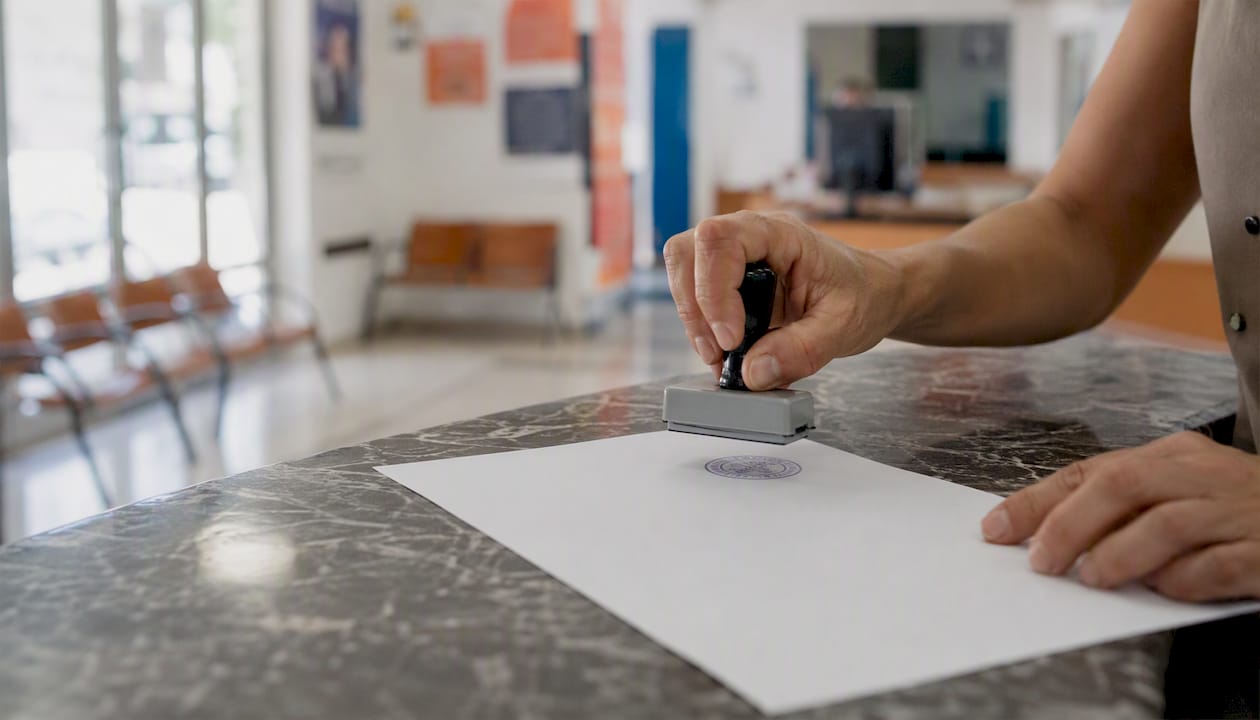
Organized-trip or tour operator invoice. Works for package-tour travelers. The invoice must show your name, the itinerary, all accommodation included, dates, and full payment confirmation. As the Spanish Ministry of Foreign Affairs notes, this proof may indicate whether it covers all or part of your living expenses during the stay.
Pro Tip: For Airbnb bookings used in a Schengen visa application, download the official booking confirmation PDF from the platform rather than a screenshot. It carries the booking reference, property address, and payment status in a format consulates recognize.
When authorities will ask you to show accommodation proof
The consulate and the border are two separate checkpoints, and both can request your documents.
- At the consulate: Your accommodation proof is reviewed as part of the visa application package. Officers assess whether it is coherent with your stated purpose of stay, your financial means, and your travel dates. Missing or mismatched documents here result in a request for additional information or an outright refusal.
- At the border on arrival: Even with a valid visa in your passport, border police retain the right to request proof of accommodation and financial means. EU and Schengen rules give member states this authority independently of the visa decision. Carry your originals.
- Triggers for extra scrutiny: Random checks happen, but certain factors raise the probability: a long stay close to the 90-day Schengen limit, inconsistencies between your stated purpose and your booking type, transit through multiple Schengen countries, or a first-time visit with limited travel history.
- ETIAS (when it launches): ETIAS will be a pre-travel authorization for visa-exempt travelers, not a visa. It does not replace document checks at the border. Your Europe confirms that member states retain the right to request additional documentary proof at the border even after authorization is granted.
How to get a carta de invitación: step-by-step for hosts and visitors
The carta de invitación is the most misunderstood document in this process. Many travelers assume their host can write a letter. They cannot. Here is the actual procedure.
-
The host gathers their documents. The host (who must be legally resident in Spain) needs their Spanish DNI, NIE, or passport; proof of their address (a utility bill or padron certificate); and proof they have the right to offer accommodation (a property deed, Nota Simple, or rental contract showing they are the tenant or owner).
-
The host books an appointment. Appointments are made through the Spanish consular procedures portal or directly at the local National Police station (Comisaría de Policía Nacional) or Oficina de Extranjería. Walk-ins are rarely accepted.
-
The host attends in person and pays the fee. The host completes the official application form at the station and pays the processing fee. The fee is set by the Spanish government and is subject to change; check the current amount with your local police station before the appointment.
-
The police issue the carta. Processing typically takes a few days to a few weeks depending on the station and time of year. The carta is issued as an official stamped document, not a printout the host generates themselves.
-
The host sends the original to the visitor. The visitor includes the original carta de invitación in their visa application package, along with the host’s contact details and the dates of the planned stay.
-
The visitor submits it with the visa application. The carta must be accompanied by the host’s ID copy and any supporting property documents the consulate requests.
Pro Tip: Start the carta de invitación process at least six weeks before your visa application deadline. Police station appointment availability varies widely by city, and delays are common during summer months.
The host takes on real legal responsibility here. Spain Handbook explains that the carta places financial and legal liability on the host if the visitor overstays, which is why the police process is strict and why informal letters carry no weight.
What fields must appear on every accommodation document
Before you submit anything to a consulate or hand it to a border officer, run through this checklist.
Required fields for all accommodation documents:
- Full traveler name, spelled exactly as it appears in the passport
- Passport number (required by some consulates, particularly for long-stay applications)
- Complete property address, including street, city, and postal code
- Check-in and check-out dates covering every single night of the planned stay
- Booking or contract reference number
- Host or establishment name and contact details (phone and email)
- Payment status: whether the booking is paid, partially paid, or deposit-only
- Signature and/or official stamp where applicable (mandatory for leases and cartas)
Document type vs. required fields:
| Document type | Key required fields |
|---|---|
| Hotel booking | Name, dates, address, reference number, payment confirmation |
| Short-term rental receipt | Name, dates, property address, booking reference, host contact |
| Rental contract | Both parties’ names, address, rental period, rent amount, signatures |
| Carta de invitación | Traveler name, host ID, property proof, dates, police stamp |
| Tour operator invoice | Name, itinerary, all accommodation listed, dates, full payment proof |
| Nota Simple | Property address, registered owner name, issued within 3 months |
On translations and originals: Documents in languages other than Spanish or English generally require a sworn translation by a certified translator. Consulates do not accept machine translations or bilingual friends. For leases and property deeds, some consulates require notarization in addition to translation. Always submit originals or certified copies, not plain photocopies, for long-stay applications.
Does prepaid accommodation reduce the financial means you must show?
Yes, in many cases it does. Official guidance from the Spanish Embassy in Ottawa confirms that proof of fully prepaid accommodation can affect the daily financial requirement for some visa categories. The logic is straightforward: if your housing costs are already covered, you need less cash on hand to sustain yourself.
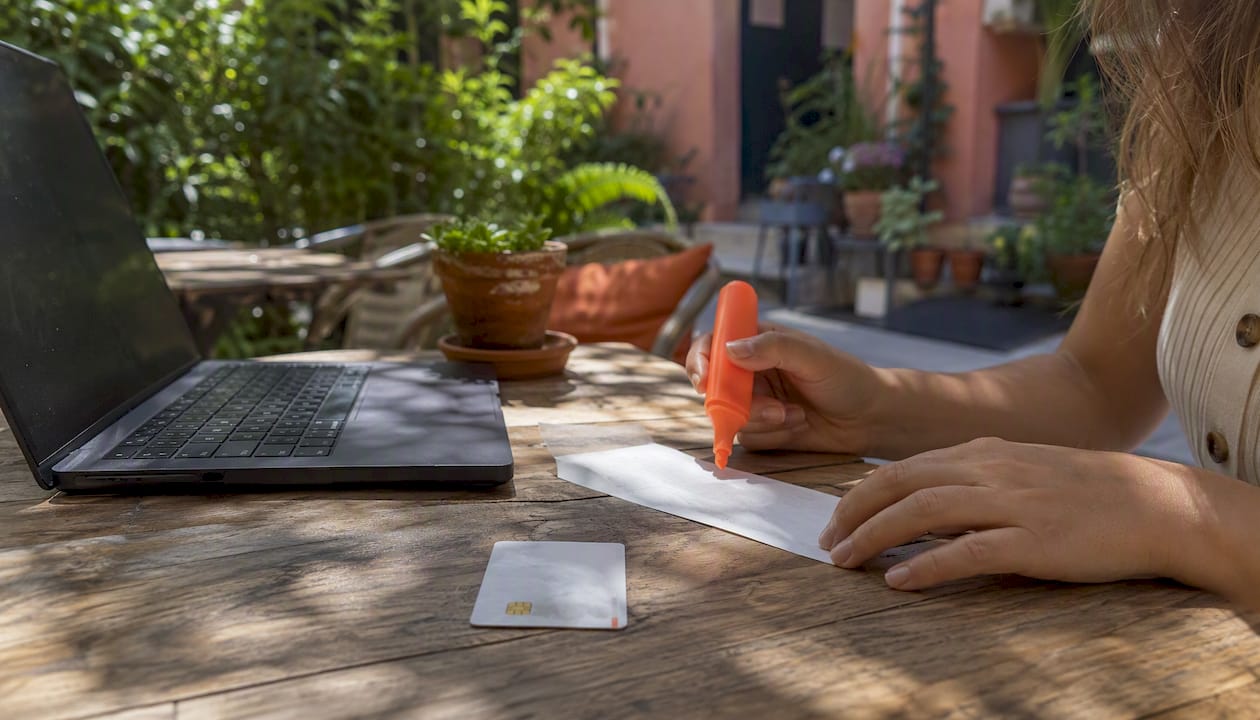
What consulates accept as proof of prepayment: a receipt or invoice showing the full amount paid, a bank statement reflecting the transaction, or a tour operator confirmation explicitly stating accommodation is included and paid. A refundable booking does not carry the same weight because it does not guarantee the expense is committed.
The reduction is not automatic or uniform. Different consulates apply this differently, and the visa category matters. Short-stay Schengen applicants benefit most clearly; long-stay applicants face more complex financial thresholds where prepaid accommodation is one factor among several. Budget guidance for the Non-Lucrative Visa covers how these thresholds interact with your overall financial profile.
Pro Tip: Print your prepayment receipt and highlight the transaction date, amount, and property address. Attach it directly behind the booking confirmation in your application folder so the reviewer does not have to hunt for the connection.
Border police may still ask about financial means on arrival even when your accommodation is prepaid. Carry bank statements or a credit card with available funds as backup.
Common red flags that get accommodation proof rejected
Most rejections come down to a handful of avoidable mistakes.
- Name mismatch. The name on the booking does not match the passport. Even a middle name discrepancy or a hyphen difference can trigger a request for clarification. Rebook under your exact legal name before submitting.
- Dates that do not cover the full stay. A booking that ends two days before your return flight tells the consulate your plans are incomplete. Every night must be accounted for.
- Refundable-only reservations with no payment. A free cancellation booking with no deposit paid signals you have not actually committed to the accommodation. Prepay or at least pay a non-refundable deposit.
- Unverifiable contact details. A host phone number that does not connect or an email address that bounces is a red flag. Consulates do occasionally verify.
- Informal host letters. An email from your friend in Madrid saying “you can stay with me” is not a carta de invitación. It will be rejected.
- Short-term Airbnb booking for a long-stay visa. A one-month Airbnb receipt submitted for a one-year visa application raises questions about where you plan to live for the remaining eleven months. Use a signed lease or supplement the Airbnb receipt with a longer-term contract.
- Missing Nota Simple for private-owner accommodation. When a private individual (not a rental agency) is your host, consulates often require a Nota Simple to confirm the host actually owns or has rights to the property.
Pro Tip: Carry a backup set of documents in your carry-on: a bank statement from the last three months, your return ticket, and a second copy of your booking confirmation. If a border officer questions your primary accommodation proof, having supporting financial evidence on hand resolves most situations quickly.
How to present accommodation documents at the consulate and border
Format matters as much as content.
For consulate submissions:
- Long-stay visa applications (Digital Nomad, Non-Lucrative, student, work) typically require original documents or certified copies. Scanned PDFs uploaded to application portals are accepted by some consulates for initial review, but originals are usually required at the in-person appointment.
- Organize documents in the order the consulate checklist specifies. Reviewers process dozens of applications daily; a clearly ordered package reduces the chance of something being missed.
- Sworn translations must be attached directly to the document they translate, not filed separately.
- Leases and property deeds may require an apostille if they originate outside Spain. Check the legalization and apostille guidance from the Ministry of Foreign Affairs for your specific document type.
For border control on arrival:
- Printed originals are strongly preferred. Some airlines and border posts accept digital confirmations on a phone screen, but a printed document eliminates any friction caused by a dead battery or a connectivity issue.
- Keep accommodation documents in your carry-on, accessible without digging through your bag.
- Your carry-on travel folder should include: accommodation confirmation, return or onward ticket, travel insurance certificate, and a bank statement or card showing available funds.
Checklist for your carry-on at arrival:
- Printed accommodation confirmation (hotel, rental, or carta de invitación)
- Passport and visa (if applicable)
- Return or onward travel ticket
- Travel insurance documentation
- Bank statement or proof of financial means
- Host contact information (phone and email)
Why accommodation proof is the document most applicants underestimate
Most people preparing a Spain visa application spend the most time on financial statements and the least time on accommodation proof. That is exactly backwards from how consulates weight coherence.
A consulate officer is building a picture of your trip: where you will be, for how long, who is responsible for you, and whether your stated purpose matches your documents. Accommodation proof is the spine of that picture. A hotel booking that ends three days before your return flight, or a carta de invitación from a host whose address does not match the one on the application, breaks the coherence of the whole file. Financial statements cannot fix that.
The carta de invitación is where I see the most preventable delays. Hosts underestimate the process, assume a signed letter will do, and the visitor submits it only to have the application stalled. Starting the police process six weeks out is not overcautious; it is the realistic minimum in most cities.
For long-stay applicants, the Nota Simple requirement catches people off guard. It is not a document most Americans have encountered before, and obtaining one from outside Spain requires working through the Spanish land registry or a local representative. Getting this right before submission, rather than scrambling after a consulate request, is the difference between a 30-day processing window and a 90-day one.
Digitalnomadinspain takes the guesswork out of your visa file
Getting your accommodation proof right is one piece of a larger application puzzle.
The team reviews your lease or rental contract for the fields consulates flag most often, verifies that your carta de invitación meets police standards, coordinates sworn translations, and organizes your full document bundle in the order each consulate expects. You do not have to figure out which consulate requires a Nota Simple or whether your Airbnb receipt is sufficient for a long-stay application.
Start with an eligibility check to confirm which visa fits your situation, then explore the Digital Nomad Visa service page or the Non-Lucrative Visa service for a full breakdown of what the process involves and what Digitalnomadinspain handles on your behalf.
Sources
These are the primary official pages to consult before submitting your application or traveling.
- How to Prove Accommodation for a Spain Visa (Lease, Hotel, Invitation Letter) - Spain Handbook
- EUR-Lex (EU legislation)
- Your Europe — entry and exit rules for non‑EU nationals
This article is general information, not a substitute for advice from a qualified lawyer. Consult a qualified legal professional about your own circumstances before acting on anything here.
FAQ
Does Spain require proof of accommodation?
Yes. Both Spanish consulates and border police can require proof of accommodation. The Spanish Ministry of Foreign Affairs lists it as a standard entry requirement for tourist and private visits.
What documents count as proof of accommodation in Spain?
Accepted documents include a confirmed hotel booking, a signed rental contract, an official police-issued carta de invitación, an organized-tour confirmation, or a verifiable short-term rental receipt. The right document depends on your visa type and length of stay.
What documents prove residence in Spain for long-stay applicants?
A signed Contrato de Arrendamiento (rental agreement) is standard, often paired with a Nota Simple confirming the landlord’s ownership. Property owners can use their escrituras (title deed). Some consulates also require a padron certificate once you are registered in Spain.
Do US citizens need ETIAS for Spain?
ETIAS is a pre-travel authorization system for visa-exempt travelers to the Schengen Area, including US citizens, that has not yet launched as of 2026. When it does, it will not replace document checks at the border; EU rules confirm member states retain the right to request accommodation and financial proof on arrival regardless of pre-travel authorization status.
Can an Airbnb booking work as proof of accommodation for a Spain visa?
For short-stay Schengen visas, a confirmed and paid Airbnb booking with a verifiable reference number generally works. For long-stay visa applications, consulates often require a signed rental contract and may ask for a Nota Simple; an Airbnb receipt alone is usually insufficient for stays longer than 90 days.