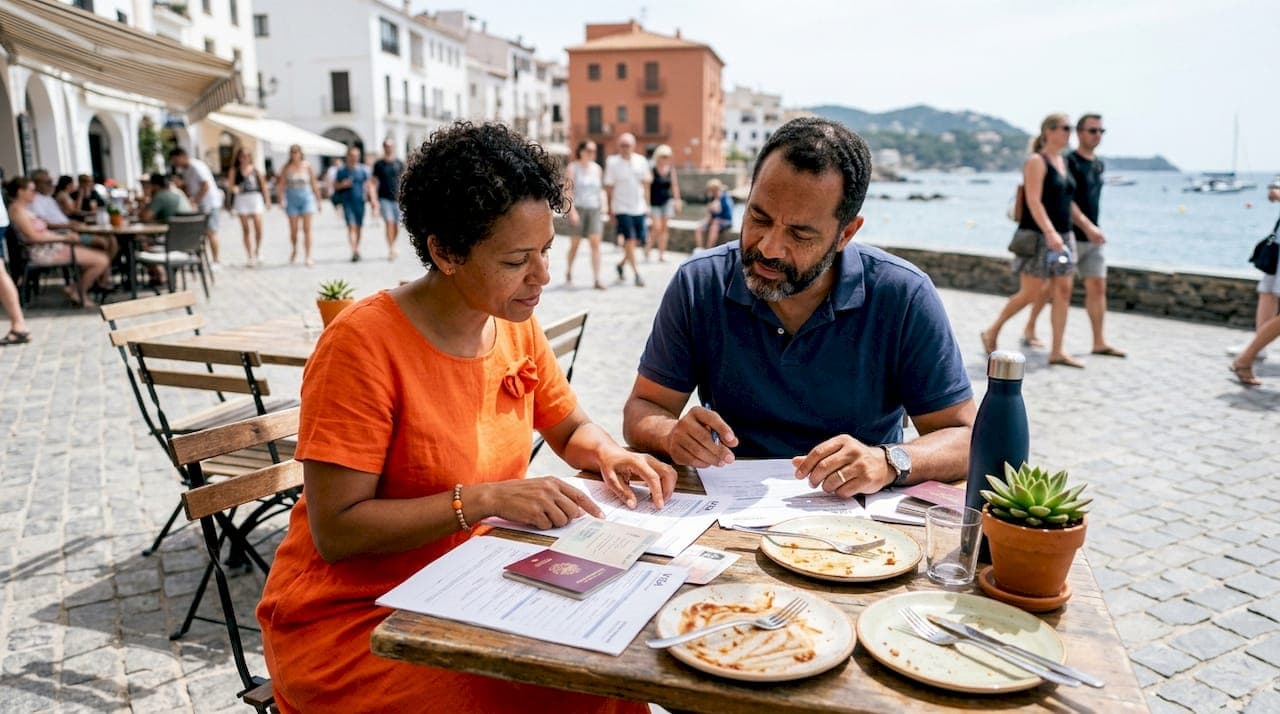
Discover how the Spain non lucrative visa to permanent residency can help you live legally in Spain. Learn the 2026 requirements and benefits!
The Spain Non-Lucrative Visa (NLV) is a residence permit that allows non-EU nationals to live in Spain legally without working, and it serves as the primary structured path to permanent residency after five continuous years. Known formally as the Visado de Residencia No Lucrativa, this Spain residence permit targets retirees, passive income earners, and anyone financially independent enough to support themselves without Spanish employment. The route from initial NLV approval to permanent residency follows a clear milestone structure: one year initial validity, two renewals of two years each, and then eligibility for long-term residence. Digitalnomadinspain has guided applicants from over 50 nations through this exact process, and the details below reflect the 2026 rules in full.
What are the financial and insurance requirements for the non-lucrative visa?
The NLV’s financial threshold is fixed at €28,800 per year for the main applicant, based on 400% of Spain’s IPREM index. Each dependent added to the application requires an additional €7,200 annually. These figures have remained unchanged since 2022, but Spanish consulates verify them strictly at every stage.
Acceptable income sources are passive by definition. Pensions, dividends, investment returns, and rental income from properties outside Spain all qualify. Spanish employment income does not qualify, and neither does active freelance work or remote work performed for Spanish clients. The consulate wants to see bank statements, pension letters, or investment account summaries that confirm consistent, recurring income.
Health insurance is the second pillar of eligibility, and it trips up more applicants than the income requirement does. The policy must come from a Spanish-authorized insurer and provide full coverage equivalent to Spain’s public health system. Critically, policies with co-payments are rejected outright, and travel insurance does not qualify under any circumstances.
- Minimum income: €28,800/year for the main applicant
- Per dependent: €7,200/year additional
- Acceptable sources: pensions, dividends, foreign rental income, investment returns
- Rejected sources: Spanish employment, active freelance work, remote work for Spanish clients
- Insurance: full-coverage private policy, no co-pays, from a Spanish-authorized provider
- Travel insurance: never accepted as a substitute
Pro Tip: Request a formal coverage letter from your insurer that explicitly states “no co-payments” and “full coverage equivalent to the Spanish public health system.” Consulates increasingly require this exact language, and a generic policy document often causes delays.
How does the application and renewal process work toward permanent residency?
The NLV application starts at the Spanish consulate in your home country, not inside Spain. You cannot enter Spain on a tourist visa and then apply locally. The consulate issues an initial visa valid for one year, during which you must enter Spain and apply for your TIE card (Tarjeta de Identidad de Extranjero), the physical residence card that proves your legal status. The TIE card process begins after arrival and requires a separate appointment with local immigration authorities.
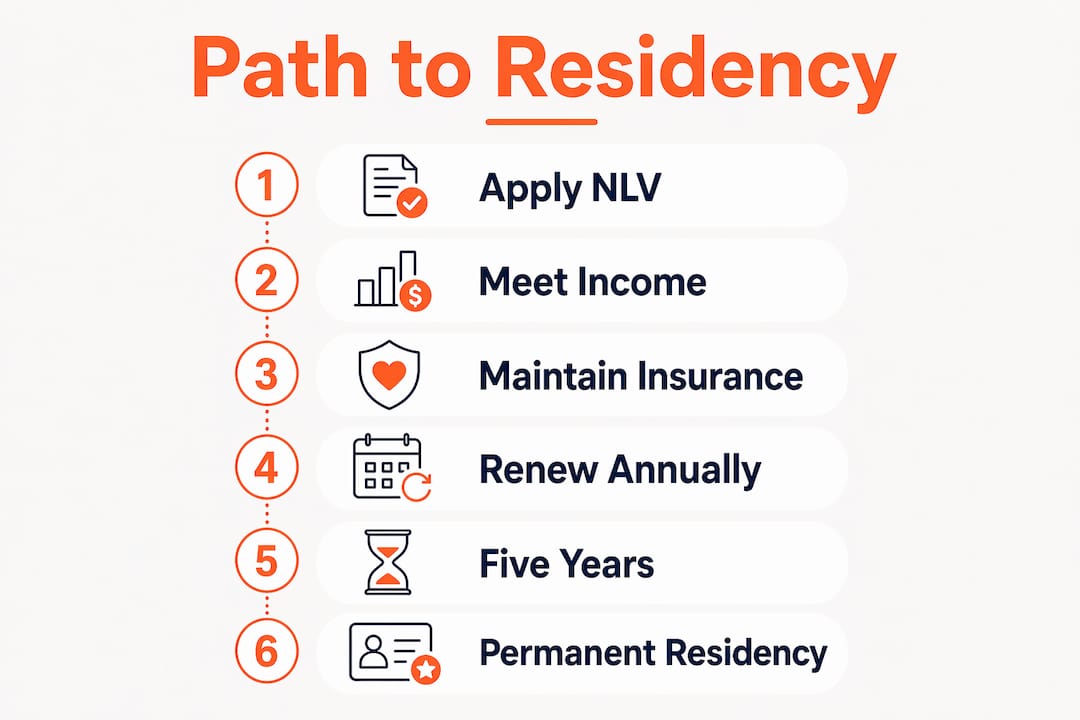
The renewal timeline toward permanent residency looks like this:
- Year 1: Initial NLV issued by consulate. Enter Spain and apply for TIE card within 30 days of arrival.
- Years 1–3: First renewal application filed before the initial visa expires. Grants two additional years of residence.
- Years 3–5: Second renewal application filed before the first renewal expires. Grants another two years.
- Year 5: Permanent residency eligibility begins. Apply for Residencia de Larga Duración.
Each renewal requires fresh proof of financial means, a valid health insurance policy, and evidence of physical presence. From 2026 onward, Spanish immigration authorities strictly enforce the 183-day rule at renewal. Spending fewer than 183 days in Spain during a given year can disqualify your renewal application entirely.
Processing times vary by consulate and by the time of year. Applications submitted in july or august often face longer waits due to reduced consulate staffing. Digitalnomadinspain reports processing times that run 30% faster than self-applicants achieve, largely because documentation packages are complete on the first submission.

Pro Tip: Keep a personal travel log with entry and exit stamps, boarding passes, and utility bills dated throughout the year. Immigration officers at renewal do ask for physical presence evidence, and a well-organized folder removes any doubt.
What rights and restrictions apply during the NLV period and after permanent residency?
The NLV prohibits any form of gainful employment or commercial activity while in Spain. This restriction covers both Spanish employers and foreign clients. Remote work for any client while physically present in Spain violates the NLV’s terms, regardless of where the client is based. Remote workers and freelancers who want to work legally from Spain should consider the Digital Nomad Visa instead, which is specifically designed for that situation. You can find a full breakdown of that option in the 2026 Digital Nomad Visa guide.
As an NLV holder, you do have the right to travel freely within the Schengen Area for up to 90 days in any 180-day period outside Spain. Your Spanish residence card serves as your travel document within the zone.
Tax residency is a consequence that many applicants underestimate. Spending more than 183 days in Spain triggers Spanish tax residency under Agencia Tributaria rules. That means worldwide income reporting, potential wealth tax obligations, and annual tax filings in Spain. Planning your tax position before you arrive is not optional; it is a financial necessity.
Once you reach permanent residency after five years, the benefits are substantial:
- Indefinite right to reside in Spain without further financial proof requirements
- Access to Spain’s public health system
- Significantly reduced administrative burden compared to annual or biennial renewals
- Right to work in Spain (permanent residency does grant work authorization, unlike the NLV itself)
- Freedom to travel outside Spain for longer periods without losing your status
Permanent residency is not citizenship. Naturalization requires 10 years of legal residence, plus passing the DELE Spanish language exam and the CCSE cultural knowledge test. Many expats underestimate the preparation those exams demand.
What common pitfalls should you avoid on the path to permanent residency?
The most frequent mistake is treating each renewal as a formality. Each renewal is a full revalidation of your eligibility, and immigration officers review your documentation as carefully as they did for the original application. Submitting outdated bank statements or a lapsed insurance policy causes immediate problems.
- Income documentation errors: Bank statements must be recent (typically within three months of the application date) and show consistent deposits matching your declared income source.
- Insurance lapses: A policy that expires mid-year and is not renewed before the renewal application creates a gap that disqualifies the application.
- Physical presence failures: Spending extended time outside Spain, even for legitimate reasons, can push you below the 183-day threshold and break the continuous residence requirement.
- Missed deadlines: Renewal applications must be filed before the current permit expires. Filing late triggers a grace period process that adds complexity and risk.
- Criminal record issues: Medical and police clearance certificates with apostilles are required from every country where you have lived in the past five years. Gaps in this documentation are a common cause of delays.
- NLV vs. Digital Nomad Visa confusion: Applicants who work remotely sometimes apply for the NLV thinking it covers passive remote income. It does not. Active work income disqualifies you from the NLV regardless of the client’s location.
Pro Tip: Set a calendar reminder 90 days before your permit expiration date. That gives you enough time to gather fresh documentation, renew your insurance, and file without pressure. Late applications are technically accepted during a grace window, but they add unnecessary scrutiny to your file.
Key Takeaways
The Spain Non-Lucrative Visa to permanent residency is a five-year, milestone-based process that requires consistent financial proof, full-coverage health insurance, and 183+ days of physical presence in Spain each year.
| Point | Details |
|---|---|
| Financial threshold | Main applicant needs €28,800/year; each dependent adds €7,200/year. |
| Health insurance standard | Policy must provide full coverage with no co-payments from a Spanish-authorized insurer. |
| Renewal structure | Initial 1-year visa, then two 2-year renewals, totaling 5 years before permanent residency. |
| Physical presence rule | 183+ days per year in Spain is required for renewal approval and triggers tax residency. |
| Permanent residency vs. citizenship | Permanent residency grants indefinite stay and work rights; citizenship requires 10 years plus DELE and CCSE exams. |
What I’ve learned after years of watching people navigate this process
The NLV path to permanent residency rewards patience and punishes complacency. I have seen applicants sail through the first year and then stumble badly at the first renewal because they treated it like a rubber stamp. It is not. Every renewal is a fresh evaluation, and the 2026 enforcement of the 183-day rule has made that reality sharper than ever.
The health insurance issue surprises me most consistently. Applicants research the income requirements thoroughly and then buy a travel insurance policy because it is cheaper and easier. That policy gets rejected, the application stalls, and suddenly a well-prepared person is scrambling to find a compliant policy under time pressure. The insurance requirement is non-negotiable and the standards are specific. Get it right the first time.
Tax residency is the other conversation that comes too late. Most people know intellectually that 183 days triggers Spanish tax residency, but they do not sit down with a tax advisor before they move. Then year two arrives, and they realize they owe Spanish wealth tax on global assets they never thought to disclose. Spain’s Agencia Tributaria is not forgiving about late filings.
My honest advice: treat the NLV as a five-year commitment that requires the same level of attention in year four as it did in year one. The permanent residency at the end is genuinely worth it. Indefinite right to live in Spain, access to the public health system, and the option to eventually pursue citizenship are meaningful rewards. But the path demands consistency, not just enthusiasm.
— Joshua
How Digitalnomadinspain supports your path to permanent residency
Navigating five years of renewals, documentation requirements, and tax implications is a significant undertaking for any expat. Digitalnomadinspain specializes in exactly this process, offering end-to-end support for NLV applications and renewals with a 98% success rate across clients from over 50 countries.
The team handles document preparation, insurance compliance checks, and renewal filing, cutting processing times significantly compared to self-applicants. Whether you are applying for the first time or approaching your second renewal, the NLV service page covers every step in detail. You can also use the eligibility checker to confirm your qualifications before you start gathering documents.
FAQ
What is the minimum income for the Spain non-lucrative visa in 2026?
The minimum is €28,800 per year for the main applicant, based on 400% of Spain’s IPREM index, plus €7,200 per year for each dependent included in the application.
Can I work remotely on the non-lucrative visa in Spain?
No. The NLV prohibits all forms of employment and commercial activity, including remote work for foreign clients. Remote workers should apply for the Digital Nomad Visa instead.
How long does it take to get permanent residency through the NLV?
Permanent residency requires five continuous years of legal residence in Spain. The NLV structure covers this through an initial one-year visa followed by two two-year renewals.
Does permanent residency in Spain allow me to work?
Yes. Unlike the NLV itself, permanent residency (Residencia de Larga Duración) grants the right to work in Spain without restrictions.
What is the difference between permanent residency and Spanish citizenship?
Permanent residency grants indefinite residence and work rights but is not citizenship. Naturalization requires 10 years of legal residence plus passing the DELE language exam and the CCSE cultural integration test.